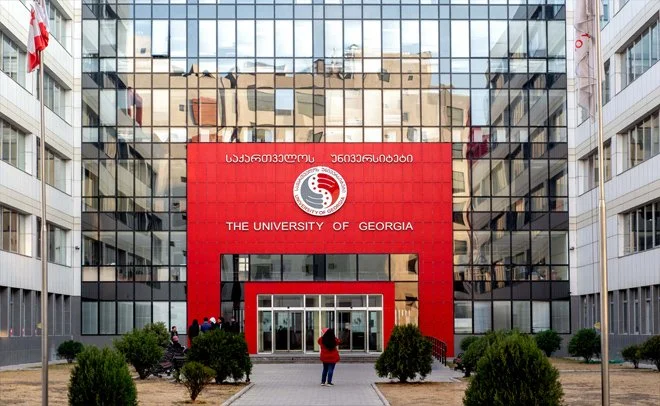
University of
Georgia
(UG)
Established: 2004
Location: Tbilisi, Georgia
Type: Private University
Programme: Medicine
Duration: 6 Years
Medium: English
Mode: Full-Time
Qualification: Medical Doctor (MD)
Credits: 360 ECTS
Tuition Fees:
6,500
USD/Annum
Recognized By
NMC
WHO
ECFMG
GMC
WDoMS
Transparent & Simple Consultancy Fee Structures
Our consultancy, documentation and any applicable admission-service charges are explained separately from university tuition. Your written quotation sets out what is included and who receives each payment.
BEGIN YOUR MEDICAL JOURNEY IN TBILISI
English Medical Education at the University of Georgia
The University of Georgia is a private multidisciplinary university in Tbilisi, established in 2004. Its English Medicine programme is a six-year, full-time course carrying 360 ECTS credits and leading to the qualification of Medical Doctor (MD). Students progress from the scientific foundations of medicine into clinical disciplines, practical skills and professional development within an international university environment.
WHY UNIVERSITY OF GEORGIA?
01. Established University Environment
Founded in 2004, UG offers medical education alongside a broad range of academic and professional programmes. Students join a university community with both Georgian and international students.
02. English Medical Doctor Programme
The six-year Medicine programme is taught in English. Georgian-language learning supports patient communication and everyday independence during clinical study.
03. A Structured 360-Credit Course
The single-cycle programme combines medical sciences, professional subjects and practical education. The approved curriculum sets the academic sequence and assessment requirements.
04. Practical and Clinical Learning
Teaching develops scientific understanding, clinical reasoning, communication and ethical judgement. Medical students build practical skills as they progress through the programme.
05. Clear Academic Tuition
The university publishes international English Medicine tuition of USD 6,500 per year. Accommodation, insurance and everyday expenses are budgeted separately.
06. Study in Georgia’s Capital
Tbilisi provides an urban student setting with public transport, healthcare services, shops, cultural attractions and an international student community.
WHAT WILL YOU STUDY?
Your Six-Year Medical Education
Medicine begins with understanding the human body and the scientific basis of health and disease. Learning then progresses into clinical subjects, patient assessment and supervised professional practice. Students develop the ability to connect scientific knowledge with clinical decisions, communicate responsibly and continue learning throughout their careers.
PROGRAMME DETAILS
Programme: Medicine
Qualification: Medical Doctor (MD)
Duration: 6 academic years
Credits: 360 ECTS
Academic language: English
Study mode: Full-time
Location: Tbilisi, Georgia
Institution: The University of Georgia
WHAT WILL YOU STUDY?
FOUNDATION & BASIC MEDICAL SCIENCES
Human anatomy and histology
Physiology
Biochemistry
Medical biology and genetics
Microbiology and immunology
Pathology and disease mechanisms
Pharmacology
Public health and medical ethics
CLINICAL & PROFESSIONAL DISCIPLINES
Internal medicine
Surgery
Paediatrics
Obstetrics and gynaecology
Neurology and related clinical disciplines
Patient assessment and diagnostic reasoning
Emergency care principles
Professional communication and clinical skills
The university curriculum determines the exact subject titles, teaching sequence, assessment and practical hours for the selected intake.
CLINICAL & PRACTICAL TRAINING
From Medical Sciences to Patient Care
The programme combines theoretical learning with practical and clinical education. Students develop their ability to collect a medical history, examine patients, interpret findings and understand treatment approaches under appropriate supervision. Clinical learning also builds teamwork, professional conduct and respect for patient confidentiality.
PRACTICAL SKILLS DEVELOPED
Medical history taking
Patient assessment and clinical examination
Diagnostic interpretation and clinical reasoning
Communication with patients and healthcare teams
Practical procedures within the approved curriculum
Medical ethics, consent and confidentiality
Obtain the detailed clinical placement and internship documents for the intended country of practice. A six-year course title alone does not establish a separate twelve-month internship arrangement.
TUITION FEES
MEDICINE | ENGLISH MEDIUM
USD 6,500 / YEAR
Programme duration: 6 years. The university’s published international tuition page lists USD 6,500 for its English programme of medical education. This is academic tuition, not a complete living-cost package.
INDICATIVE SIX-YEAR TUITION
USD 6,500 × 6 years = USD 39,000.
This planning calculation applies the current annual reference over six years. The education contract and any future university fee changes determine the payable amount.
COMPLETE COST STRUCTURE
Academic tuition: USD 6,500 per year
Accommodation: separate rental or residence agreement
Health insurance: separate policy and coverage terms
Medical documents or examinations: as requested for the applicable route
Visa or residence procedures: applicable official charges
Academic-document translation and recognition: separate where required
Meals, groceries and personal expenses: a monthly student allowance
Flights, transfers and local transport: budget separately
Consultancy and documentation services: only as separately agreed
The university’s incoming-student guidance gives indicative monthly housing costs of GEL 800–1,500 and other living costs of GEL 900–1,100. These are planning references rather than a guaranteed current rental quotation; the actual residence, room sharing and lifestyle determine expenditure.
REALISTIC ANNUAL BUDGET
Keep the academic charge and living budget separate: USD 6,500 tuition, plus an indicative GEL 20,400–31,200 for twelve months of housing and ordinary living expenses using the university guidance ranges. Insurance, immigration procedures, flights, document processing and any service charges are additional.
These amounts use different currencies and should not be added without a dated exchange conversion. Rent sharing, the length of the stay and personal spending can substantially change the annual budget.
ADMISSION REQUIREMENTS
Who Can Apply?
Applicants need an accepted secondary-school qualification, appropriate science preparation and the required English proficiency. The university assesses the application and determines the programme-specific tests, interview and documentation.
ACADEMIC BACKGROUND
Class 12 / 10+2 or an equivalent school-leaving qualification
Science preparation suitable for medical study
Academic certificates and subject marksheets
English-language readiness for the programme
FOR INDIAN STUDENTS
Indian applicants should provide their applicable NEET documentation and check the medical education, internship and registration requirements governing their intended return to India. English-medium study is one requirement, not a blanket licensing approval.
OTHER DOCUMENTS
Valid passport
School certificates and transcripts
Passport photographs
Required translations, legalisation or recognition documents
English-language evidence required under the applicable rules
Health and immigration documents requested for the selected route
ENTRANCE EXAMINATION
University Assessment and English Readiness
UG’s application information describes an assessment of English and programme-specific preparation. Applicants should follow the current examination or interview instructions supplied by the university. Current Georgian language-certification rules also apply; an older university examination waiver should not be assumed to satisfy a newer national requirement.
Prepare the science subjects in your school qualification, practise explaining your motivation for medicine in English and keep the requested original documents available.
ADMISSION PROCEDURE
Review the English Medicine programme and intended licensing route
Prepare academic and identity documents
Submit the application through the university’s applicable process
Complete the required assessment or interview
Review the admission decision and written education contract
Check tuition, other charges and payment dates
Arrange accommodation and the applicable immigration permission
Travel according to the university’s arrival instructions
Admission depends on the university’s evaluation and the rules for the relevant intake. Follow the announced schedule rather than relying on dates from a previous year.
DOCUMENTATION PROCESS
Your Application, Step by Step
STEP 01 — Academic and programme eligibility review
STEP 02 — Passport, school records and subject marksheets
STEP 03 — Required translation, legalisation and recognition
STEP 04 — English-language and programme assessment documents
STEP 05 — University decision and education contract
STEP 06 — Payment under the university’s written instructions
STEP 07 — Visa or residence documentation where required
STEP 08 — Accommodation, travel and arrival preparation
Keep digital copies and the originals required at enrolment. Names, passport details and dates should be consistent across the application file.
VISA & MIGRATION SUPPORT
Preparing for Study in Georgia
The correct visa or residence route depends on nationality, travel history and the applicable Georgian rules. Use the university’s admission documents and current consular or immigration instructions when planning travel. Tourist entry should not be assumed to replace the permission required for the intended period of study.
Check the applicable student-entry and residence process
Prepare university admission and enrolment documents
Arrange the requested financial, insurance and accommodation evidence
Follow the official application and appointment instructions
Keep immigration documents valid throughout the stay
NxtGen’s assistance is limited to the services agreed in the student’s quotation; the relevant authorities decide visa and residence applications.
MEDICAL & IMMIGRATION FORMALITIES
Prepare Before Arrival
Arrange health insurance and the medical documents requested by the university or the relevant authority. Check the policy dates, exclusions, hospitals and emergency arrangements, and carry essential health information and prescriptions when travelling.
University-requested medical or health certificates
Insurance covering the intended stay
Vaccination and prescription records where relevant
Passport and immigration-document validity
Accommodation and local contact information
Arrival and enrolment instructions
Follow the health, enrolment and immigration requirements applicable to your destination, nationality and selected study route.
ACCOMMODATION
Choosing Your Home in Tbilisi
The university’s incoming-student guidance states that it does not provide its own housing and can assist students with finding accommodation. Confirm the options available for the chosen intake directly before booking.
Compare distance to classes, transport links, room sharing, utilities, heating, internet, deposits and contract terms. The published housing reference is GEL 800–1,500 per month, with the actual cost depending on the property and arrangement. Obtain a current written quote and clarify whether the amount is per room, apartment or person.
STUDENT LIFE
An International University Experience
UG brings together students in medicine and other disciplines in Tbilisi. Student life can combine academic study with cultural activities, sport, university events and opportunities to build friendships across countries.
A multidisciplinary academic community
International and Georgian student networks
Access to city transport and everyday services
Cultural attractions and local travel
Independent living and language learning
Medical study is demanding. A consistent routine for classes, independent study, rest and practical preparation helps students make the most of the university experience.
LIVING EXPENSES
Building a Monthly Student Budget
University guidance gives an indicative allowance of GEL 900–1,100 per month for ordinary living expenses excluding rent. Housing is additional. This guidance is a planning reference; actual costs vary with the date, location and student’s choices.
Meals and groceries
Local transport
Mobile connection and internet
Laundry and household supplies
Books and study materials
Clothing and personal items
Recreation and local travel
Health expenses outside insurance coverage
Record recurring costs separately from first-year setup expenses. Sharing accommodation and cooking arrangements can change the budget, while deposits and flights require additional funds upfront.
GEORGIAN LANGUAGE SUPPORT
English Academics, Local Communication
The Medicine programme is taught in English. Georgian-language learning helps with daily life and communication with patients and local healthcare teams. Build practical vocabulary alongside medical knowledge and follow the language components included in the approved programme.
Confirm whether any additional language tuition is compulsory or optional and whether it is included in the education contract.
WHAT IS INCLUDED IN TUITION?
Academic Tuition and Other Expenses
The education contract defines the teaching and academic services covered by the university’s tuition charge. The published tuition should not be treated as an all-inclusive study-abroad package.
ITEMS BUDGETED SEPARATELY
Accommodation, utilities and deposits
Food and personal expenses
Health insurance and healthcare costs
Visa and residence procedures
Air tickets and local transfers
Document translation, legalisation and recognition
Optional courses and services
Separately agreed consultancy or documentation charges
ESTIMATED SIX-YEAR COST
At the current annual academic reference, six years of tuition amounts to USD 39,000. A complete course budget also needs accommodation, insurance, immigration procedures, food, transport, flights and personal expenses over the actual period of study.
Use the university’s written fee schedule and the student’s accommodation quotation for a detailed plan. Future tuition changes, exchange rates and the chosen living arrangement can alter the final cost.
FIRST-YEAR ADDITIONAL EXPENSES
Preparation and recognition of academic documents
Required translations or legalisation
Initial visa or residence applications where applicable
Health insurance and requested medical documentation
Flights and arrival transport
Accommodation deposit and initial rent
Essential clothing, bedding and household setup
Any separately agreed application-support services
The first-year payment schedule can differ from later years. Obtain a written breakdown showing payment recipients, due dates, compulsory items and optional services.
NXTGEN EDUCAREER
WE DON’T STOP AT ADMISSION.
NxtGen Educareer provides guidance from university selection through application and arrival preparation within the services agreed with each student.
BEFORE ADMISSION
University and programme comparison
Academic and document review
Programme-language and fee explanation
Application preparation and coordination
AFTER ADMISSION
Education-contract and payment guidance
Immigration-document preparation guidance
Accommodation and travel preparation
University arrival instructions
AFTER ARRIVAL
Student-support coordination follows the service scope agreed in writing. University decisions, academic results and immigration approvals remain with the relevant institutions and authorities.
FEE & PROGRAMME INFORMATION
Annual tuition reference: USD 6,500 for the English Medicine programme. The university awards Medical Doctor (MD); “MBBS abroad” is a common search term rather than the exact qualification title. Living-cost references are estimates from university guidance and are not fixed university charges.
Medical registration depends on the requirements of the intended country of practice, including the accepted qualification, language, curriculum, clinical training and internship. Names of international organisations or licensing bodies should not be read as a guarantee of eligibility.
University sources: tuition · Medicine programme · application · living and accommodation guidance. Reviewed 15 November 2026. The written intake offer and contract govern admission and payable charges.
Process
Step 1 — Eligibility Check
Review academic documents, the intended language pathway and applicable Indian requirements.
Step 2 — Document Preparation
Prepare academic records, passport and the university’s required documents.
Step 3 — University Application
Submit the application and complete required assessments.
Step 4 — Admission Confirmation
Check the admission decision, education contract and payment schedule.
Step 5 — Visa Application
Complete the applicable invitation and student-visa process.
Step 6 — Pre-Departure Preparations
Confirm accommodation, travel, insurance and arrival instructions.
Get a Free Consultation
Tell us what you're looking for and our counsellor will get in touch with you.